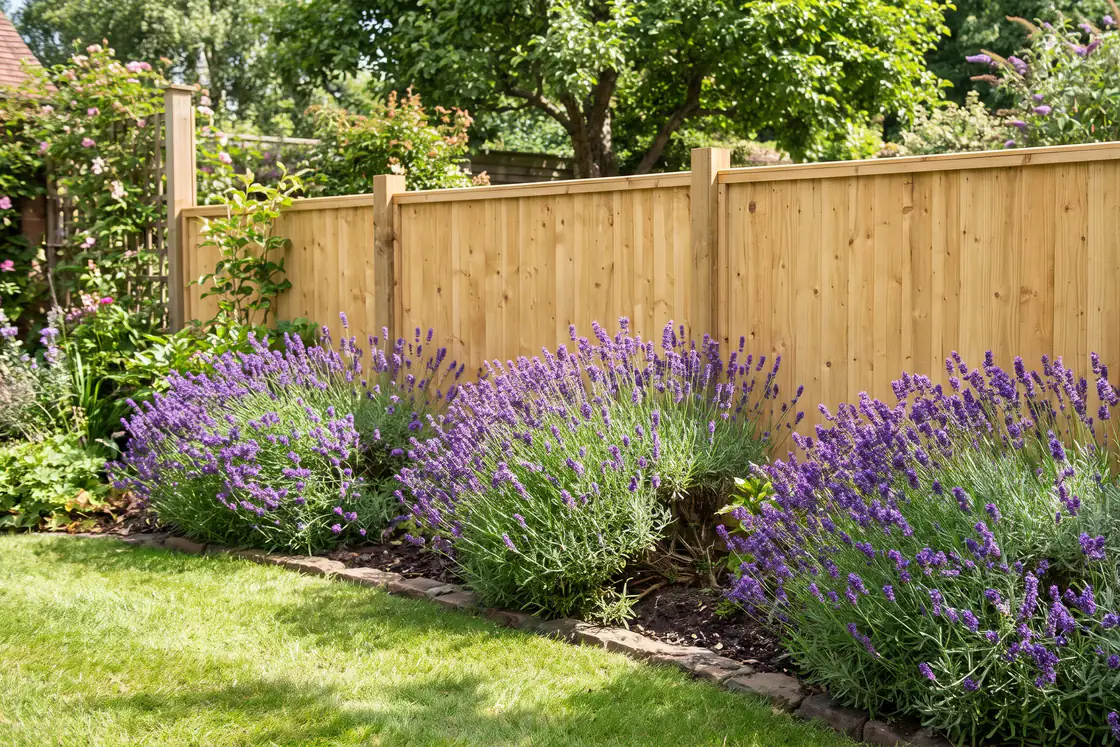
How to measure the post holes
You need three things: the number of posts, the size of the posts and the size of the holes. A panel fence has one post more than it has panels in each run; if you haven’t counted them yet, the fence calculator does it for you.
Hole width is measured across the top of the hole. Tarmac and Jacksons Fencing both suggest a hole about three times the width of the post, which is 300 mm across for a 100 mm post and 225 mm for a 75 mm one. The calculator fills that in when you choose the post; a much wider hole uses a lot more concrete.
Hole depth is measured from the ground to the bottom of the hole. UK guides give 450–600 mm, and fence makers bury the posts of a full-height fence at the deeper end. Measure with a tape held against the side of the hole rather than guessing from the spade.
The calculator treats each hole as round, like one dug with a post-hole spade or an auger, and works out the space round the post. A square hole dug with an ordinary spade holds as much as a round one about an eighth wider, so if you dig square holes, type a width about an eighth more than the real one.
Recommended hole sizes for fence posts
These are the hole sizes UK guides give. Tarmac, for its Postcrete, and Hanson, for its PostFix, say to buy at least 2 bags per post for a 6 ft panel. Filling a hole of the size they suggest takes more than that, so the calculator works from the hole and treats their figure as the minimum. Use it for any other size.
| Post | Hole width | Hole depth | Bags per post | Apply |
|---|---|---|---|---|
| Standard post100 mm square, Tarmac's example | 300 mm | 450–600 mm | At least 2 bags; filling the hole takes more | |
| Smaller timber post75 mm square | 225 mm | 450–600 mm | At least 2 bags at full depth | |
| Slotted concrete postAbout 100 mm across | 300 mm | 450–600 mm | At least 2 bags; filling the hole takes more |
At the shallow end of the depth range a hole holds a quarter less, and so does the ring of concrete round the post, so the bags drop by a quarter too. The makers’ minimum is for a full-depth hole, so the calculator only applies it there. All of this is a guide only: for tall fences, gates, exposed sites or soft ground, check the hole size with your supplier or a fencing contractor.
How many bags of postcrete per post?
At least 2 bags for the post of a 6 ft panel: that is what Tarmac says for Postcrete and Hanson for PostFix, and merchants such as Walford Timber repeat it. Treat it as a minimum. A 20 kg bag sets to about 0.009–0.011 m³, much the same as a bag of ready-to-use concrete, so a 300 mm round hole dug to full depth round a 100 mm post takes noticeably more than the makers’ figure to fill.
Other sizes change it more than you might think. The concrete fills the ring between the post and the side of the hole, and the volume of a hole grows with the square of its width: a hole a quarter wider holds about half as much again. A smaller post in a narrower hole needs noticeably less, which is what the worked example below shows.
How this postcrete calculator works it out
This postcrete calculator works out the volume of a round hole (π × radius² × depth), takes off the part the post fills (its width × width × depth), and divides what’s left by what one bag fills. The steps under the result show each figure in litres.
That last figure, 0.009–0.011 m³ for a 20 kg bag, is the volume a bag fills once it has set, the same as Tarmac gives for a bag of its ready-to-use concrete. The makers’ bags-per-post tables assume a hole that is only partly filled, so this calculator works from the hole you actually dig and treats their figure as a minimum: for a full-depth hole it never gives less than 2 bags per post, and the steps say when it has raised the figure.
Postcrete and other post-fixing concrete
Postcrete is Tarmac’s brand name for its rapid-setting post-fixing concrete, sold under the Blue Circle name. Other makers sell the same kind of product, such as Hanson’s PostFix, and big merchants have their own. It comes dry in 20 kg bags and sets within minutes once water is added, so have each post upright and braced before you start, and follow the bag’s instructions for the water.
The shopping list calls it post-fixing concrete because the same sums apply to any brand. If your bag gives its own yield, or a higher bags-per-post figure for your hole, go with the bag. The fence calculator uses the same sums for a whole fence.
Worked example: smaller posts in narrower holes
Here is the full calculation for a short fence on 75 mm timber posts, with holes a little narrower than the standard size but just as deep, and no extra allowance. Every line comes from the same code as the calculator above.
- Hole volume π × (0.25 m ÷ 2)² × 0.6 m = 29.5 litres
- Less the post 75 × 75 mm × 0.6 m = 26.1 litres to fill
- Bags per post 26.1 ÷ 10 litres a bag = 2.61
- All posts 7 × 2.61 + 0%, rounded up = 19 bags
On the list:
- 19bags of post-fixing concrete (Post-fixing concrete, 20 kg bag)2.61 bags per post
Notice that even these smaller posts in narrower holes come out above the makers’ minimum of 2 bags per post: filling the hole takes more than their figure. Notice too how the total is rounded. The bags per post are multiplied by the number of posts first and only the total is rounded up, because one bag can be shared between two holes.
UK post-fixing concrete and post sizes
In the UK, post-fixing concrete is sold in 20 kg bags by Tarmac (as Blue Circle Postcrete), Hanson and the big merchants. Fence posts are usually 75 mm or 100 mm square timber, or slotted concrete posts of about the larger size.
| Product | Size | Good for |
|---|---|---|
| Post-fixing concrete, 20 kg bag | 20 kg | Rapid-setting concrete for fence posts. |
| 75 × 75 mm timber | 75 mm wide | Common timber post for panels. |
| 100 × 100 mm timber | 100 mm wide | Stronger timber post for exposed sites. |
If your posts are a different size, choose the nearer one. A bigger post leaves less room for concrete, so if you are between sizes, the smaller one gives a slightly generous answer.
Common mistakes with postcrete
- Buying only the makers’ minimum. 2 bags per post is the least the makers suggest for a 6 ft panel. A full hole of the usual size takes more, and bigger holes more still.
- Holes much too wide. The volume grows with the square of the width. About three times the post’s width is the usual guide.
- Counting square holes as round. A square hole holds more than a round one of the same width. Type a slightly wider hole to allow for it.
- Measuring depth from the spoil heap. Measure from the finished ground level, not from the soil piled up beside the hole.
- Rounding up for every post. Bags can be shared between holes. Multiply first, then round up the total.
- Opening the bag too soon. It sets in minutes, so have the post upright and braced before the concrete goes in.
- No spare bag. If a hole comes out bigger than planned, you’ll want one to hand.
What else you'll need
- Panels, posts, gravel boards and caps for the whole fence: the fence calculator counts them, along with the post-fixing concrete.
- Fence treatment once the fence is up: the fence paint calculator works out the litres and tins.
- Posts for a deck frame can be set the same way; the decking calculator works out the boards, joists and screws for the deck itself.
- A post-hole spade or auger, a spirit level and timber battens to brace each post while the concrete sets.
- Water close to the holes, in buckets or a watering can, so you’re not walking back and forth once you start.
Last checked 28 October 2026